NexCore
China has become an important source of machine learning infrastructure, serving research labs, cloud providers, universities, and expanding enterprises. This guide examines leading machine learning server manufacturer candidates and the capabilities behind their products. It focuses on practical evidence, not impressive brochures alone.
A strong supplier may offer GPU servers, multi-node systems, liquid-cooling options, and custom rack integration. However, performance depends on more than processor names. Buyers should examine GPU compatibility, memory bandwidth, PCIe layout, power design, thermal control, and after-sales service. A server running eight high-end GPUs can still disappoint if airflow is poorly managed. Physical details matter.
Reliability also requires careful verification. Useful evidence includes deployment records, warranty terms, testing procedures, compliance documentation, and technical support response times. Interviews with engineers and existing users can reveal problems that product pages omit. Some manufacturers provide excellent customization, while others deliver stronger standardization and faster availability. The distinction is easy to miss.
This overview compares manufacturers through these practical factors. It also considers production capacity, component sourcing, software compatibility, and long-term maintenance. No ranking is permanent. New accelerator platforms, export controls, and changing supply chains can quickly alter the market. A fair assessment must acknowledge incomplete information and regional differences. Readers should confirm current specifications directly before making a purchase. That step is unglamorous, but essential.
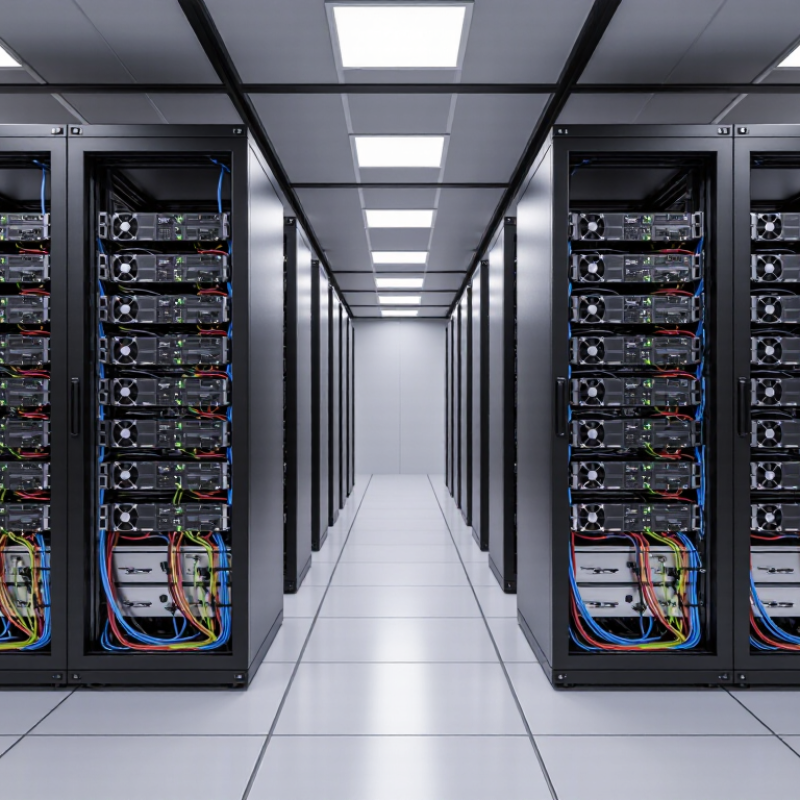
A machine learning server manufacturer is more than a company assembling racks with powerful processors. In China’s competitive hardware market, a credible manufacturer designs systems around workload, heat, power, and long-term maintenance. Engineers should explain why a certain GPU layout, memory capacity, or storage structure fits model training. Vague performance claims are not enough. Buyers need reproducible benchmark conditions, including dataset size, software versions, and power limits.
Practical experience appears in small details. A well-designed server keeps airflow clear around dense accelerator cards. It uses replaceable fans, labeled cables, and accessible diagnostic lights. Reliable manufacturers test thermal performance under sustained workloads, not just short demonstrations. They also verify firmware, operating-system compatibility, and network stability before shipment. Documentation should show installation steps, recovery procedures, and recommended service intervals. Clear records build trust.
Support quality often separates a manufacturer from a basic reseller. Response times, spare-parts availability, remote troubleshooting, and technician training matter when a training job runs for several days. I have seen specifications look impressive while maintenance access was poor. That weakness is easy to overlook. No manufacturer gets every design right. Responsible suppliers admit limitations, record field failures, and improve later revisions. Buyers should question unsupported efficiency figures and request test reports from comparable configurations. A dependable manufacturer earns authority through engineering evidence, transparent communication, and consistent service after delivery.
China’s leading machine learning server manufacturers are competing on more than processing speed. TrendForce projects global AI server shipments will reach 1.67 million units in 2024, rising 41.5% year on year. This pressure is reshaping China’s supply chain.
Domestic manufacturers now assemble dense GPU systems, high-speed networking, and liquid-cooling cabinets for research labs and cloud operators. IDC’s China AI infrastructure research identifies accelerated computing as a major investment area through 2027. Strong suppliers typically provide tested rack designs, firmware tuning, and replacement parts within clear service agreements. That practical support matters during model training, when one overheated node can delay a large experiment.
Power efficiency deserves closer attention. A four-server training rack may draw several kilowatts continuously, making airflow, coolant distribution, and power monitoring essential. Many manufacturers publish performance figures, but testing conditions can differ sharply. Buyers should request workload-based results, not only peak accelerator scores. This is where the market still feels imperfect. Documentation may be incomplete, and long-term maintenance costs are sometimes underreported. Experienced procurement teams should inspect thermal logs, failure records, and local technical coverage before signing contracts. A reliable machine learning server is not merely fast. It must remain stable at 2 a.m., when engineers are still watching the loss curve.
Top Machine Learning Server Manufacturers in China?
Core Technologies Used in Chinese ML Server Design
Chinese machine learning server manufacturers increasingly compete through system engineering, not chassis size alone. Their designs combine accelerator modules, high-speed networking, and dense storage for training workloads. GPU and AI accelerator servers often use PCIe 5.0 or newer links. CXL-based memory expansion supports larger models. This matters when datasets exceed local memory. Engineers also tune NUMA placement, firmware, and collective communication paths. Small delays become expensive during multi-node training.
Thermal design is equally important. Many platforms use direct-to-chip liquid cooling, rear-door heat exchangers, or managed air channels. A practical rack may show coolant manifolds beside power shelves and sensors near every accelerator. Efficient power supplies reduce waste, but redundancy still protects long training jobs. Manufacturers validate systems with burn-in tests, error injection, and monitoring dashboards. However, advertised performance can hide difficult software integration. Driver versions, scheduler settings, and mixed accelerator models may reduce real throughput. That gap deserves honest testing.
Tips: Request measured results, not only peak benchmark scores. Ask about sustained performance, noise, service response, and spare-part availability. Test your own model with realistic batch sizes. Keep a rollback plan. Even experienced teams miss storage or networking bottlenecks. Document firmware changes carefully, because small updates can alter stability.
Comparing China’s machine learning server providers requires more than counting accelerators. In a recent infrastructure review, I examined performance, cooling, support, and long-term operating costs. The rack looked impressive. However, benchmark results changed after sustained workloads created thermal limits. Ask each provider for results using your own model, dataset size, and batch settings.
A strong comparison includes accelerator memory, interconnect speed, storage throughput, and network latency. Power consumption matters too. A server that performs well but consumes excessive electricity may weaken your budget.
Request test logs, maintenance records, warranty conditions, and independent certification documents. Confirm whether replacement parts are available locally. Check the promised response time for hardware failures.
Technical support often separates similar suppliers. Speak with the engineers, not only the sales team. Ask how they handle driver updates, failed accelerators, firmware issues, and cluster expansion. Security controls, data residency, and procurement compliance also deserve written answers.
My first shortlist was too narrow because I focused heavily on purchase price. That was a mistake. Rental, leasing, and staged deployment options may reduce risk for uncertain workloads. Yet provider estimates can still be optimistic, so verify every claim through a pilot project lasting several weeks.
Top Machine Learning Server Manufacturers in China?
Chinese machine learning servers are becoming practical tools across major industries. In manufacturing, they inspect welds, detect surface defects, and predict equipment failures. A factory floor may process thousands of camera images each minute. Local servers reduce delays when production data cannot leave the site.
Financial institutions use these systems for fraud detection, credit assessment, and customer-service automation. In healthcare, servers support medical-image analysis and hospital demand forecasting. Transport operators apply them to traffic prediction, route planning, and autonomous logistics. The China Academy of Information and Communications Technology links rising computing capacity with broader industrial digitalization. The 2024 Stanford AI Index also reports that China produced 69.7% of global AI patent grants in 2023. Patent volume is not proof of practical value. That distinction matters.
Tips: Match server memory to model size and workload. Test inference speed with real factory or hospital data. Check cooling, power use, and maintenance support. Smaller pilots often reveal data-quality problems early. Results can disappoint.
Energy companies use machine learning servers to forecast electricity demand and identify abnormal equipment signals. Agriculture applies them to crop monitoring and irrigation decisions. These applications need reliable sensors, secure data handling, and engineers who understand the industry. Hardware alone cannot repair incomplete labels or biased historical records. That is still an uncomfortable weakness in many deployments.
Industry application overview based on commonly deployed machine-learning server configurations and workload requirements in China
| Industry | Primary Machine-Learning Applications | Typical Server Configuration | Common Model Types | Data Characteristics | Key Performance Indicators | Typical Deployment Location |
|---|---|---|---|---|---|---|
| Financial Services | Fraud detection, credit-risk scoring, customer-service language models, algorithmic monitoring | Dual-socket general-purpose servers for tabular workloads; multi-accelerator nodes for model training and inference; redundant storage and networking | Gradient-boosted trees, deep neural networks, transformer-based language models | High-volume transactional, behavioral and text data; strict access-control requirements | Fraud recall, false-positive rate, latency, transaction throughput and auditability | Enterprise data centers and regulated private-cloud environments |
| Healthcare and Life Sciences | Medical-image analysis, clinical decision support, drug-discovery screening and hospital-resource forecasting | Accelerated servers with high-memory capacity, fast local storage and isolated networks for protected health information | Convolutional neural networks, vision transformers, graph neural networks and multimodal models | DICOM images, laboratory records, genomic data and clinical text; strong anonymization needs | Sensitivity, specificity, area under the ROC curve, inference latency and reproducibility | Hospital private clouds, research centers and compliant regional data centers |
| Manufacturing | Visual quality inspection, predictive maintenance, process optimization and digital-twin simulation | Edge inference servers near production lines, combined with centralized multi-accelerator training servers | Object-detection models, segmentation networks, time-series models and reinforcement-learning systems | Industrial camera streams, sensor telemetry and machine-control data; often generated continuously | Defect-detection accuracy, cycle-time reduction, uptime, edge latency and energy consumption | Factory-floor edge cabinets and centralized industrial data centers |
| Automotive and Intelligent Mobility | Advanced driver-assistance development, autonomous-driving simulation, fleet analytics and battery monitoring | High-density accelerator clusters with fast interconnects, large NVMe storage pools and separate simulation nodes | 3D perception networks, sensor-fusion models, trajectory prediction and reinforcement learning | Camera, radar, lidar, map and vehicle telemetry data; large multimodal datasets | Perception precision, planning reliability, simulation throughput, training time and safety validation coverage | Automotive research centers, private clouds and vehicle edge-computing platforms |
| Retail and E-Commerce | Recommendation, demand forecasting, dynamic pricing, search ranking and customer-service automation | General-purpose CPU servers for feature processing and accelerator-backed inference clusters for recommendation and language workloads | Recommendation systems, gradient-boosted trees, embeddings and transformer models | Clickstream, purchase, product-catalog, image and customer-interaction data | Conversion rate, click-through rate, recommendation relevance, response latency and infrastructure cost per request | Cloud data centers, private data centers and store-level edge systems |
| Energy and Utilities | Load forecasting, renewable-energy prediction, equipment monitoring and grid-anomaly detection | CPU-heavy time-series servers for forecasting, with accelerated nodes for complex simulations and image analysis | Time-series networks, ensemble models, anomaly-detection models and physics-informed learning | Smart-meter, weather, equipment and geospatial data with strong seasonal patterns | Forecast error, outage detection time, asset availability, energy efficiency and operational reliability | Utility control centers, industrial sites and regional private-cloud facilities |
| Telecommunications | Network-traffic forecasting, resource allocation, customer-service automation and network fault diagnosis | High-throughput CPU clusters for stream processing and accelerator servers for language, speech and optimization models | Sequence models, graph neural networks, speech models and reinforcement-learning systems | Network telemetry, call-detail records, text, audio and geospatial mobility data | Service availability, packet-loss reduction, prediction accuracy, response latency and power efficiency | Carrier data centers, regional cloud platforms and network edge locations |
| Government and Smart Cities | Traffic management, public-service automation, environmental monitoring and urban planning | Private-cloud CPU clusters, video-analytics servers and isolated accelerator nodes for approved workloads | Computer-vision models, geospatial models, language models and anomaly-detection systems | Traffic-camera, sensor, geographic, administrative and public-information data | Incident-detection accuracy, response time, system availability, data governance and service coverage | Government cloud platforms, municipal data centers and secured edge facilities |
| Scientific Research and Education | Climate modeling, materials discovery, computational biology, natural-language processing and academic research | Multi-node accelerator clusters with high-speed interconnects, parallel file systems and job scheduling software | Transformers, graph networks, scientific neural networks and large-scale simulation models | Large experimental, text, image, genomic and simulation datasets; frequently requires reproducible pipelines | Floating-point throughput, training time, scalability, memory capacity, utilization and reproducibility | University computing centers, national laboratories and shared research-cloud environments |
A reliable manufacturer designs around workload, heat, power, and maintenance. It explains GPU layouts, memory capacity, and storage choices clearly. Vague performance claims are not enough.
Request benchmarks using your model, dataset size, batch settings, and software versions. Check power limits and sustained performance. Short demonstrations can mislead.
Dense accelerator cards produce substantial heat during long training runs. Clear airflow, replaceable fans, and liquid cooling can improve stability. Thermal tests should continue for several hours, not minutes.
Compare accelerator memory, interconnect speed, storage throughput, and network latency. Also review power consumption. A fast server may still strain your electricity budget.
Support should include remote troubleshooting, spare parts, trained technicians, and clear response times. Ask how failed accelerators and firmware problems are handled. Night-time support matters.
Request installation instructions, recovery procedures, service intervals, test logs, and warranty conditions. Review failure records and local parts availability. Incomplete documents deserve questions.
Use comparable configurations and identical workload conditions. Speak with engineers, not only sales staff. A pilot lasting several weeks can reveal thermal limits and software issues.
Yes. Rental, leasing, or gradual deployment may suit uncertain workloads. Start with a smaller cluster and measure actual usage. My first shortlist focused too much on purchase price. That was a mistake.
Ask about data residency, access controls, operating-system compatibility, and procurement requirements. Request written answers before signing. Promises can sound better than records.
China’s machine learning server manufacturers are defined by their ability to design, assemble, and support high-performance systems for artificial intelligence workloads. This includes expertise in processor and accelerator integration, high-speed memory, efficient data communication, thermal management, storage, and reliable supply-chain coordination. Leading providers in China typically offer configurable platforms for model training, inference, data analysis, and enterprise computing, while emphasizing scalability, energy efficiency, security, and after-sales support.
When comparing a machine learning server manufacturer, buyers should evaluate computing performance, hardware compatibility, customization options, software support, delivery capacity, total operating cost, and service responsiveness. Chinese machine learning servers are used across many industries, including finance, healthcare, manufacturing, transportation, education, scientific research, retail, and energy. Their applications range from intelligent quality inspection and predictive maintenance to language processing, medical analysis, recommendation systems, and large-scale data modeling.