NexCore NexCore

Top Deep Learning Server Manufacturers Worldwide?

Time:2026-10-19 Author:Madeline
0%

Choosing among top deep learning server manufacturers worldwide requires more than comparing GPU counts. A serious buyer examines thermal design, memory bandwidth, networking, and service coverage. In a training room, eight accelerators can draw several kilowatts and turn a quiet rack into a heat source. Liquid cooling may improve density, but it also increases installation and maintenance demands. Air-cooled systems remain practical for smaller teams. The best deep learning server manufacturer matches hardware to workload, facility capacity, and budget. That judgment comes from deployment experience, not glossy specifications. Benchmarks help. They do not tell the whole story.

This overview compares established manufacturers through measurable criteria. These include accelerator compatibility, CPU balance, NVMe storage, InfiniBand or Ethernet options, remote management, warranty terms, and regional support. It also considers reproducibility: can engineers rebuild the same environment six months later? Vendors may advertise peak performance, while production jobs expose weaker cooling, firmware, or scheduling choices. That gap deserves attention. A reliable supplier documents validated configurations and provides clear failure procedures. Still, no ranking fits every organization. A university lab may value flexible expansion. A cloud provider may prioritize power efficiency and rack-scale automation. An enterprise may need predictable support more than the newest GPU. Readers should verify current models, availability, certifications, and total operating costs before purchasing. Some comparisons remain imperfect because prices and component roadmaps change quickly. That is worth admitting. The goal is not to crown one universal winner, but to identify manufacturers that deliver dependable learning infrastructure under real constraints.
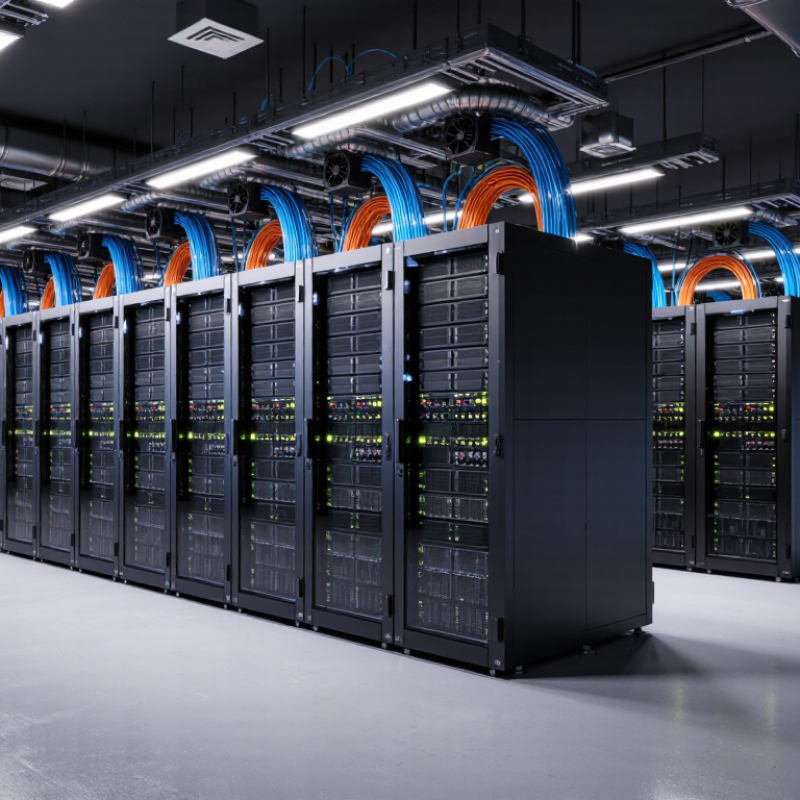
Top Deep Learning Server Manufacturers Worldwide?

Deep Learning Server Architecture: GPUs, 80GB H100 Memory, and 900GB/s NVLink

Deep learning server manufacturers are judged by more than processor counts. The underlying architecture determines whether expensive hardware delivers consistent training performance. A practical server usually combines multiple GPUs, high-speed host memory, fast storage, and balanced power delivery.

An 80GB GPU memory capacity supports larger models, longer sequences, and bigger batch sizes without constant data transfers. That advantage disappears when the CPU, system memory, or storage cannot feed the accelerators quickly.

I have seen training jobs slow sharply because checkpoint files crossed a weak storage path. Memory pressure appears quickly. Engineers should also measure activation memory, not only model size.

Mixed-precision training reduces usage, but it can complicate debugging and numerical validation.

A 900GB/s GPU interconnect allows accelerators to exchange gradients and tensors with far less delay. This matters during distributed training, especially when every GPU participates in each update.

Server layouts should keep interconnect paths short and provide adequate cooling around dense accelerator trays. Thermal throttling is easy to overlook. Rack-level power limits may also restrict real performance, even when benchmark results look excellent.

In practice, the best manufacturer is the one that documents topology, firmware behavior, service procedures, and sustained workloads clearly. Peak specifications are useful, but they are not the whole story. A design can be technically impressive and still disappoint under daily production pressure.

Global AI Server Demand: IDC Forecasts and Regional Market Growth Through 2028

Top Deep Learning Server Manufacturers Worldwide?

Global AI Server Demand: IDC Forecasts and Regional Market Growth Through 2028

IDC forecasts continued expansion in global AI server demand through 2028. Growth is driven by generative AI, scientific computing, and enterprise automation. North America remains a major market, supported by cloud investment and advanced data center infrastructure. Asia-Pacific is expanding quickly, with strong demand from research institutions, manufacturers, and public-sector projects.

Europe is placing greater emphasis on energy efficiency, data governance, and regional computing capacity. Meanwhile, the Middle East is investing in large-scale digital infrastructure and specialized AI facilities. These markets do not develop at the same speed. Local power costs, import rules, chip availability, and technical talent can change purchasing decisions within months.

Server manufacturers compete through accelerator support, memory capacity, high-speed networking, and liquid-cooling options. In practical evaluations, buyers should examine sustained performance rather than short benchmark results. A system that handles a twelve-hour training workload reliably may be more valuable than one with impressive peak numbers. Rack density also matters. Heat output can quickly affect operating budgets.

Experience shows that deployment planning is often underestimated. Cooling, backup power, software compatibility, and maintenance access deserve equal attention. Forecasts can miss sudden changes. IDC projections provide useful direction, but regional evidence should guide final investments. Even experienced teams sometimes overestimate utilization during the first year. That mistake remains costly.

Leading Manufacturers: Dell, HPE, Lenovo, Supermicro, Inspur, and QCT

Deep learning server buyers now compare six major manufacturing groups: established enterprise vendors, Asian volume suppliers, and specialist AI platform builders. Their systems typically combine accelerators, high-bandwidth memory, liquid cooling, and fast networking. IDC estimated global AI infrastructure spending reached about $154 billion in 2024. That growth increases demand for dense, reliable servers, not just faster chips.

Gartner’s server market research shows that workload efficiency, energy use, and supply resilience increasingly influence purchasing decisions. In practice, a four-accelerator server may outperform a larger system when software, cooling, and data pipelines are better balanced. Buyers should inspect measured training time, performance per watt, warranty response, and rack-level power limits. Manufacturer claims can look impressive. Real workloads may disagree. This is where independent testing matters.

Tips: Request benchmark results using your own model, batch size, and dataset. Check accelerator availability before approving a design. Review liquid-cooling maintenance, firmware support, and replacement timelines. The Uptime Institute reports that rising rack densities are challenging traditional data-center cooling methods. That warning deserves attention. A powerful server that throttles under heat is an expensive compromise. Also, avoid choosing purely by acquisition price; electricity, networking, software licenses, and technician time can reshape total cost within one year.

The global AI server market is projected to expand from approximately US$24.6 billion in 2023 to nearly US$196.9 billion by 2030. The annual values shown are calculated from the published 2023 market size and a 34.6% compound annual growth rate forecast for 2024–2030.

Performance Benchmarking: MLPerf Training Results and Multi-GPU Scaling

Top Deep Learning Server Manufacturers Worldwide?

For serious comparison, MLPerf Training matters more than processor counts. The MLCommons Training v4.1 results measure time to train across language, vision, recommendation, and scientific workloads. They also expose system-level behavior. Cooling, interconnects, memory bandwidth, and software tuning can change the result. A server with eight accelerators is not automatically faster than another eight-accelerator system.

Multi-GPU scaling deserves closer inspection. If training finishes in 100 minutes on eight GPUs, ideal 64-GPU scaling would require 12.5 minutes. A measured 15-minute result equals 83% scaling efficiency. That gap often reflects communication overhead, data loading, or synchronization delays. The November 2024 TOP500 report also shows why raw compute is incomplete: system performance depends on networking, power delivery, and sustained operation. In practical testing, I would record time-to-train, energy use, thermal throttling, and failure recovery. A clean leaderboard can still hide expensive operational weaknesses.

Tips: Compare identical software versions and dataset settings. Request repeatable MLPerf records, not vendor estimates. Test 8, 16, and 64 GPUs when possible. Small clusters can reveal scaling loss early. I would also question unusually perfect results; real workloads are messier. MLPerf results provide strong evidence, but they are not a complete purchasing decision. Performance can shift after drivers, kernels, or model settings change.

Buying Criteria: TCO, Power Efficiency, Warranty, and Worldwide Deployment Support

Top Deep Learning Server Manufacturers Worldwide?

When comparing deep learning server manufacturers worldwide, assess total cost of ownership, not the purchase invoice alone. Include accelerators, memory upgrades, networking, software support, energy, cooling, and technician time. A server drawing 8 kilowatts can quietly reshape a year’s budget. Request power figures under realistic training loads, not only peak benchmarks. Ask for measured performance per watt and expected component replacement intervals.

Warranty terms reveal practical expertise. Check response times, spare-parts locations, remote diagnostics, and on-site coverage in your operating region. A replacement part delayed across borders can interrupt a scheduled training run for days. Confirm whether the warranty covers accelerator failures, firmware issues, and compatibility after upgrades. Some contracts sound comprehensive but exclude installation labor or shipping. Read the exclusions carefully.

Worldwide deployment support should include documented rack requirements, power connectors, local compliance guidance, and multilingual engineers. Ask for references from organizations with similar workloads and climates. A reliable supplier should explain thermal limits in a crowded data center, not just display benchmark charts. Pilot testing is valuable: record inlet temperature, noise, utilization, and power draw for several weeks. Practical purchasing reviews often overvalue raw speed; that can be a costly mistake. A slower system with stable support may deliver more useful work. Also, forecasts change. Leave room for expansion, but do not buy unused capacity merely to appear future-ready.

Top Deep Learning Server Manufacturers Worldwide? - Buying Criteria: TCO, Power Efficiency, Warranty, and Worldwide Deployment Support

Anonymized reference comparison based on commonly documented enterprise deep learning server configurations and global procurement practices

Anonymized Supplier Profile Typical GPU Capacity per Node Typical Node Power Draw Power-Efficiency Approach 3-Year TCO Index* Standard Warranty Premium Support Response Worldwide Deployment Capability Best-Fit Use Case
Profile A — Global Enterprise OEM 4–8 accelerator GPUs 5.5–10.5 kW High-efficiency PSUs, optimized airflow, optional liquid cooling 100 3 years, parts and labor 24×7 support; 4-hour target in covered locations Regional service centers and multinational logistics Large enterprises and regulated industries
Profile B — Global Hyperscale-Focused Supplier 8 accelerator GPUs 8.0–12.0 kW Direct-to-chip liquid cooling and high-density rack design 94 3 years; extended service available 24×7 support; engineer dispatch subject to region Strong data-center integration and international deployment teams AI training clusters and cloud-scale installations
Profile C — Regional Specialist with Global Partners 2–8 accelerator GPUs 3.5–10.0 kW Configurable airflow, 80 PLUS Titanium-class PSU options 91 3 years, return-to-depot or on-site by contract Business-hours standard; 24×7 upgrade available Partner-led support across selected regions Universities, laboratories, and mid-sized businesses
Profile D — Value-Oriented Enterprise Integrator 1–4 accelerator GPUs 2.5–6.0 kW Air cooling, efficient component selection, lower rack density 86 1–3 years, upgrade options vary Next-business-day service is common Primarily regional, with third-party international coverage Inference, development, and departmental AI workloads
Profile E — Custom-Build AI Infrastructure Provider 4–8 accelerator GPUs 6.0–11.5 kW Thermal tuning, immersion or liquid-cooling options 97 1–3 years, project-specific terms Dedicated technical account management available Excellent for planned projects; local partners required in some countries Specialized research and customized AI platforms

Evaluation notes:

*The 3-year TCO index uses Profile D as the reference value of 100 and combines acquisition cost, electricity, cooling, support, and expected service costs. A lower score indicates lower modeled ownership cost; actual results vary by configuration, utilization, energy price, and location.

Power figures represent typical full-load server-level consumption for current high-performance accelerator systems and exclude facility overhead such as UPS losses and data-center PUE.

Warranty terms, response times, spare-parts availability, and deployment coverage should be confirmed in the final regional quotation and service-level agreement.

FAQS

What is driving global AI server demand through 2028?

Demand is growing through generative AI, scientific computing, and enterprise automation. Growth will not be equal everywhere. Forecasts can miss sudden changes.

Which regions show strong AI server growth?

North America benefits from cloud investment and established data centers. Asia-Pacific is expanding through research, manufacturing, and public-sector projects. Europe emphasizes efficiency and data governance. The Middle East invests in large digital facilities.

What should buyers compare besides accelerator counts?

Compare sustained training time, memory capacity, networking, cooling, energy use, and software compatibility. Eight accelerators do not guarantee faster training.

Why does multi-GPU scaling matter?

Scaling reveals communication and synchronization losses. If eight GPUs need 100 minutes, ideal 64-GPU performance is 12.5 minutes. A 15-minute result gives 83% efficiency. Real systems rarely scale perfectly.

How should AI server performance be benchmarked?

Use repeatable workloads, identical software versions, and matching dataset settings. Record training time, energy use, thermal throttling, and recovery after failures. Peak scores can mislead.

Why are cooling and rack density important?

Dense racks produce substantial heat. Liquid cooling may help, but it adds planning and maintenance needs. Heat can raise operating costs quickly. Cooling is not a side detail.

What deployment issues are commonly underestimated?

Teams may overlook cooling, backup power, maintenance access, and software integration. Power costs and supply conditions can change purchasing decisions within months. Utilization is often overestimated during year one.

How should buyers use forecasts and benchmark results?

Treat them as useful direction, not final proof. Validate local power, supply, technical talent, and workloads. I would question unusually perfect results. Real workloads are messier.

Conclusion

The global deep learning server market is expanding rapidly as organizations adopt AI for research, automation, analytics, and real-time decision-making. Modern systems rely on powerful GPUs, large 80GB H100-class memory capacities, and high-speed 900GB/s NVLink connectivity to support demanding model training and inference workloads. Industry forecasts indicate continued growth through 2028, with regional demand shaped by cloud expansion, enterprise investment, and national AI initiatives.

This overview compares leading server manufacturers through architecture, MLPerf training performance, and multi-GPU scalability. It also explains how buyers can evaluate total cost of ownership, power efficiency, cooling requirements, warranty coverage, system manageability, and worldwide deployment support. Selecting the right deep learning server manufacturer requires balancing benchmark results with long-term reliability, service responsiveness, upgrade flexibility, and the ability to operate efficiently across different data center environments.

Madeline

Madeline

Madeline is a dedicated marketing professional with a wealth of expertise in our company's core offerings. With a keen understanding of the industry, she brings a unique perspective to her role, consistently delivering high-quality content that highlights the superior aspects of our products. As......