NexCore NexCore

Top 10 Cloud AI Server Manufacturers for Global Buyers

Time:2026-09-14 Author:Madeline
0%

Choosing the right cloud AI server manufacturer is no longer a simple hardware decision. Global buyers must evaluate GPU performance, memory capacity, networking speed, cooling design, security, and long-term support. A server may appear powerful on paper, yet struggle under sustained model training or high-density inference workloads. Small details matter. Rack depth, power limits, firmware updates, and replacement timelines can affect daily operations.

This guide introduces ten leading cloud AI server manufacturers for international buyers. Each company is considered through practical criteria, including technical capability, deployment experience, product reliability, regional service coverage, and customer transparency. We also examine how manufacturers support popular accelerators, liquid cooling, virtualization, and scalable data center architectures. Compliance and supply-chain stability receive attention because responsible procurement extends beyond performance figures. A lower-cost system may create higher maintenance expenses later. That risk deserves careful review.

No ranking is flawless. Market conditions, component availability, and product releases change quickly. Some manufacturers perform exceptionally in enterprise deployments, while others offer stronger value for research teams or regional cloud providers. Buyers should verify specifications directly, request realistic workload testing, and review warranty terms before signing contracts. Independent benchmarks can help, but they do not always reflect production conditions. This overview is a practical starting point, not a final purchasing decision. Careful comparison remains essential.
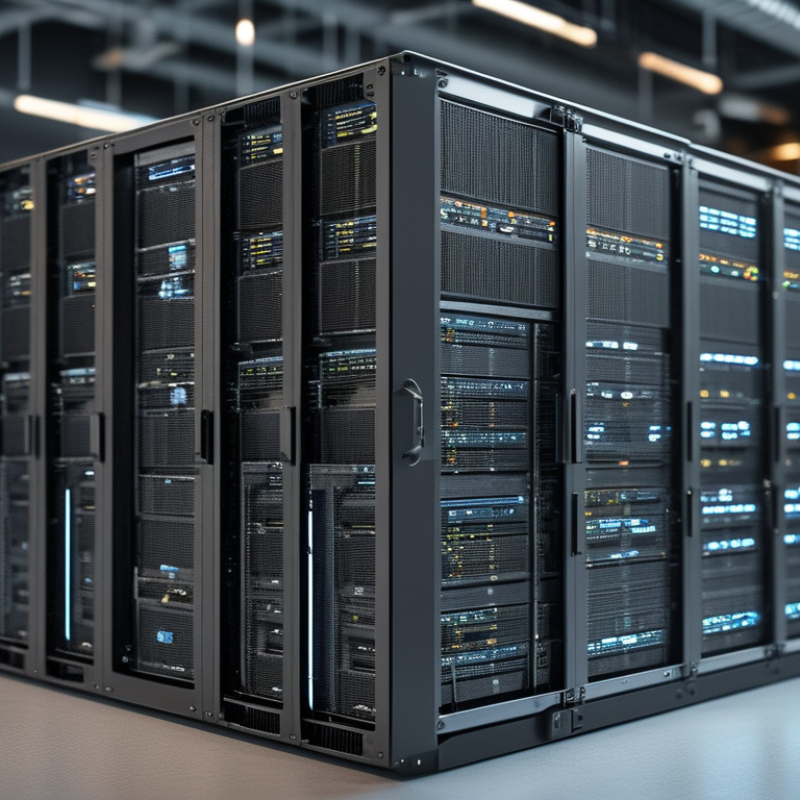
Top 10 Cloud AI Server Manufacturers for Global Buyers

Cloud AI Server Manufacturers: Definition, Scope, and Market Role

Top 10 Cloud AI Server Manufacturers for Global Buyers

Cloud AI Server Manufacturers: Definition, Scope, and Market Role

Cloud AI server manufacturers design and assemble computing systems for artificial intelligence workloads. These systems usually combine accelerators, processors, memory, networking, storage, and specialized cooling. They support model training, inference, data processing, and virtual machine deployment.

The scope extends beyond physical hardware. Manufacturers may provide rack integration, firmware tuning, remote management, security controls, and maintenance services. Some also prepare systems for major cloud platforms or private data centers. A practical evaluation should examine power consumption, thermal design, expansion capacity, network latency, and replacement procedures. A server that performs well in a laboratory may struggle in a crowded rack.

Details matter.

In the market, these manufacturers connect component suppliers with cloud operators, system integrators, and enterprise buyers. Their work influences computing availability, deployment speed, and long-term operating costs. Experienced buyers often request workload-based benchmarks instead of relying on headline specifications. They also review warranty terms, regional support, spare-part access, and software compatibility. This process can reveal hidden limitations.

No supplier fits every workload. Training systems may prioritize accelerator density, while inference platforms often need predictable latency and efficient power use. Market rankings can guide research, but they cannot replace technical validation. Even careful comparisons may miss changing electricity prices, cooling constraints, or evolving software requirements. That uncertainty deserves attention before a global purchase.

Core Technologies Behind Modern Cloud AI Servers

Modern cloud AI servers are built around accelerator-rich architectures, not conventional CPU racks. Dedicated processors handle matrix operations, while high-bandwidth memory keeps large models supplied with data. Fast interconnects then link thousands of devices with low latency. This matters because Stanford’s AI Index 2025 estimates that advanced model training costs reached tens or hundreds of millions of dollars. A slow network can waste that investment.

Cooling has become a core computing technology. High-density racks increasingly use direct-to-chip liquid cooling, which removes heat more efficiently than room-level air systems. The International Energy Agency reported that data centers consumed about 415 TWh of electricity in 2024. It projects demand may exceed 900 TWh by 2030. Efficiency is no longer optional. It is an operating requirement.

Software decides whether expensive hardware performs well. Distributed training frameworks divide workloads across accelerators, while scheduling systems shift tasks between training and inference. Memory compression can reduce serving costs, though accuracy may suffer. That trade-off deserves closer testing. Stanford’s AI Index 2025 also found that the cost of querying a model at GPT-3.5-level performance fell more than 280-fold between late 2022 and late 2024. Yet cloud buyers should inspect less visible details: failure recovery, secure data isolation, power availability, and measured performance under sustained loads. Peak benchmark numbers can mislead. Real workloads are messier.

Top 10 Cloud AI Server Manufacturers for Global Buyers

Top 10 Cloud AI Server Manufacturers for Global Buyers

Choosing among the top 10 cloud AI server manufacturers requires more than comparing processor counts. Global buyers should examine accelerator compatibility, memory capacity, rack density, cooling design, and regional service coverage. A server may deliver impressive benchmark results yet struggle in a crowded data center. Measure real workloads, not only laboratory scores. For example, test model training, inference latency, storage traffic, and power use during a full business day. Small details matter. A 10-minute thermal throttle can affect an entire production schedule.

Reliable manufacturers usually provide documented firmware, clear warranty terms, spare-part access, and trained local technicians. Buyers should also verify export requirements, data-center certifications, and software support before signing contracts. Independent testing is useful, but it cannot replace a controlled pilot. Request deployment references from environments with similar voltage, cooling, and network conditions. I would also inspect noise levels and maintenance access, because technicians eventually work beside these machines. That part is often ignored. No ranking stays perfect for long; supply shortages, new accelerators, and changing energy prices can quickly alter value. My own preference may lean toward easier service rather than the highest benchmark score, and that judgment deserves review. Global buyers need transparent evidence, realistic operating costs, and support that remains dependable after installation.

This benchmark compares the ten most important purchasing dimensions for global cloud AI server buyers. The scores are normalized to a 100-point scale, with performance, energy efficiency, scalability, reliability, and total cost of ownership receiving the greatest weighting.

How to Compare Cloud AI Server Manufacturers

Top 10 Cloud AI Server Manufacturers for Global Buyers

Comparing cloud AI server manufacturers requires more than checking processor counts. Evaluate GPU availability, memory capacity, network speed, and support response times. Ask for measured results using your own workloads, not only laboratory figures. A server handling image analysis may behave differently during language-model training. Performance is not everything.

Review deployment flexibility, security controls, maintenance procedures, and regional data requirements. Reliable manufacturers should explain cooling design, power usage, spare-part access, and upgrade paths clearly. Request service-level commitments in writing. Also examine the supplier’s experience with large-scale clusters and mixed workloads. I have seen attractive specifications hide weak technical support. That detail can delay a project for weeks.

Tips: Build a simple scorecard before contacting suppliers. Give separate scores for performance, total operating cost, delivery time, support quality, and scalability. Test one demanding workload and one ordinary workload. Check references from organizations with similar data volumes. Do not trust a single benchmark. No scorecard is perfect. Recheck assumptions after testing, especially when electricity prices, import rules, or model requirements may change.

Key Purchasing Factors for International Cloud AI Deployment

Top 10 Cloud AI Server Manufacturers for Global Buyers

International cloud AI deployment requires more than accelerator specifications. Buyers should match server architecture with workload patterns, model size, inference latency, and regional demand. A training cluster may need high-bandwidth memory and fast interconnects, while inference nodes often value efficiency and predictable response times. Small details matter. Rack depth, power connectors, and local spare parts can delay deployment.

Energy planning deserves equal attention. The International Energy Agency’s Electricity 2024 report estimates that data centers consumed about 460 TWh globally in 2022. It projects consumption could exceed 1,000 TWh by 2026. Therefore, purchasers should compare performance per watt, cooling design, and peak-load behavior. Uptime Institute’s Global Data Center Survey 2024 also identifies power availability and sustainability as continuing operational concerns. Liquid cooling may improve density, but it adds maintenance skills and possible failure points.

Cross-border procurement also requires careful verification. Check regional data residency rules, security certifications, firmware control, warranty coverage, and response times. Confirm compatibility with existing orchestration, storage, and monitoring systems. Total cost should include electricity, networking, software support, customs, and technician training. A low purchase price can become expensive later. Frankly, many evaluation spreadsheets remain too optimistic. They often use laboratory benchmarks instead of real customer traffic. Run a controlled pilot with representative models, measure utilization, and record thermal behavior across several weeks. That evidence is more reliable than impressive specifications alone.

Top 10 Cloud AI Server Manufacturers for Global Buyers - Key Purchasing Factors for International Cloud AI Deployment

Anonymized manufacturer profiles and practical procurement benchmarks for international cloud AI infrastructure projects.

Rank Anonymized Manufacturer Profile Primary AI Deployment Focus Typical Accelerator Configuration Typical Server Power Recommended Rack Density High-Speed Network Requirement International Procurement Factor Typical Project Lead-Time Best-Fit Buyer
1 Profile A
High-density AI systems specialist
Large-model training and distributed generative AI 8 accelerator cards per server; liquid-cooled configurations available 8–12 kW per server 30–80 kW per rack with advanced cooling 200–400 Gb/s fabric per node or cluster path Verify liquid-cooling support, service parts, export documentation, and facility compatibility 12–24 weeks Hyperscale and research cloud operators
2 Profile B
Enterprise AI server integrator
Private-cloud inference, fine-tuning, and analytics 4–8 accelerator cards per server; air-cooled options common 4–8 kW per server 15–40 kW per rack 100–200 Gb/s Ethernet or equivalent low-latency fabric Check virtualization compatibility, remote management, warranty coverage, and regional repair capability 8–16 weeks Enterprise data centers
3 Profile C
Flexible multi-purpose platform builder
AI inference, computer vision, and mixed workloads 2–4 accelerator cards per server; single-socket and dual-socket options 1.5–4 kW per server 8–20 kW per rack 25–100 Gb/s Ethernet Prioritize standard rack dimensions, common replacement parts, and broad operating-system support 6–12 weeks Regional cloud service providers
4 Profile D
Modular cloud infrastructure supplier
Containerized AI services and scalable inference 1–4 accelerator cards per node; modular expansion supported 1–3.5 kW per server 8–25 kW per rack 25–100 Gb/s Ethernet with programmable segmentation Evaluate Kubernetes integration, firmware lifecycle policy, and spare-node strategy 6–14 weeks Managed cloud and colocation providers
5 Profile E
Edge and distributed-AI manufacturer
Low-latency inference at branch, retail, and industrial sites 1–2 accelerator cards per compact server 0.5–1.5 kW per server 3–10 kW per rack or enclosure 10–50 Gb/s Ethernet Confirm operating-temperature range, dust protection, remote diagnostics, and local installation support 4–10 weeks Telecom and industrial operators
6 Profile F
Energy-efficient AI platform provider
Sustainable inference and high-utilization cloud workloads 2–8 accelerator cards with power-capping controls 1.5–7 kW per server 10–35 kW per rack 100–200 Gb/s Ethernet Request measured performance-per-watt data, power profiles, and cooling-water requirements where applicable 8–18 weeks Energy-constrained data centers
7 Profile G
High-memory AI infrastructure supplier
Recommendation engines, graph analytics, and large in-memory models 2–4 accelerator cards with 512 GB–2 TB system memory options 2–5 kW per server 10–25 kW per rack 50–200 Gb/s Ethernet Assess memory expandability, NUMA behavior, storage bandwidth, and database certification 8–16 weeks Financial and data-intensive enterprises
8 Profile H
Storage-optimized AI system manufacturer
Data preparation, model serving, and AI data lakes 1–4 accelerator cards with NVMe-based local storage 1.5–4.5 kW per server 8–25 kW per rack 25–100 Gb/s Ethernet; higher speeds for shared storage Validate IOPS, usable capacity after redundancy, encryption, backup integration, and drive replacement policy 6–14 weeks AI hosting and research organizations
9 Profile I
Telecom-grade AI infrastructure builder
Network AI, 5G analytics, and geographically distributed inference 1–4 accelerator cards in short-depth or ruggedized systems 0.8–3 kW per server 5–20 kW per rack 25–100 Gb/s Ethernet with time-sensitive networking options Check NEBS-style environmental requirements, remote operations, long lifecycle, and field-service coverage 8–20 weeks Telecom and edge-cloud providers
10 Profile J
Custom-build global system integrator
Specialized AI clusters and regional cloud deployments Configurable from 1 to 8 accelerator cards per server 1–12 kW per server 8–80 kW per rack, depending on design 25–400 Gb/s, selected according to cluster scale Require a complete bill of materials, acceptance testing, customs support, and multi-country service-level terms 10–24 weeks Global buyers with custom requirements
Procurement note: The figures above are representative market ranges for current cloud AI server deployments, not claims about any named company. Final specifications should be validated through a request for proposal, workload benchmarking, power and cooling studies, regional compliance checks, and written warranty and service-level agreements.

FAQS

What does a cloud AI server manufacturer provide?

It designs and assembles systems for training, inference, data processing, and virtual machines. These systems combine accelerators, processors, memory, networking, storage, and cooling. Some suppliers also provide rack integration, firmware tuning, remote management, security controls, and maintenance.

Which hardware features matter most in an AI server?

Check accelerator density, memory capacity, processor performance, network speed, and expansion options. High-bandwidth memory helps keep large models supplied with data. Fast interconnects reduce delays between computing devices. More hardware is not always better.

Why is cooling important for cloud AI servers?

Dense racks produce substantial heat during long training workloads. Direct-to-chip liquid cooling can remove heat more efficiently than room-level air systems. Inspect water connections, maintenance access, backup plans, and rack temperature limits. Heat changes everything.

How much electricity can AI infrastructure require?

Data centers consumed roughly 415 TWh of electricity in 2024, according to the article. Demand could exceed 900 TWh by 2030. Buyers should compare power usage during sustained workloads, not only peak performance. Electricity costs may change.

How should buyers compare different manufacturers?

Build a scorecard covering performance, operating cost, delivery time, support quality, and scalability. Request test results using your own workloads. For example, test image analysis and language-model training separately. One benchmark is insufficient.

What support details should buyers examine?

Review warranty terms, response times, spare-part availability, regional service, and replacement procedures. Ask how failures are handled inside a crowded rack. Written service commitments are safer than informal promises. Support can decide project timing.

Why can published benchmarks be misleading?

Laboratory results may not reflect sustained loads, network congestion, cooling limits, or recovery after failures. A server may perform well briefly, then slow down under continuous use. Test ordinary and demanding workloads. Real conditions are untidy.

What software factors affect AI server performance?

Distributed training software divides workloads across accelerators. Scheduling systems can shift resources between training and inference. Memory compression may reduce serving costs, but accuracy can decline. That trade-off needs testing. Perfect efficiency is unlikely.

Can one manufacturer fit every AI workload?

No. Training systems often prioritize accelerator density and memory bandwidth. Inference platforms may favor predictable latency and efficient power use. Private data centers may need stronger security and cooling controls. The best choice can still age badly.

Conclusion

Cloud AI server manufacturers play a vital role in delivering the computing infrastructure required for artificial intelligence applications worldwide. This article explains their definition, scope, and market role, while examining the core technologies behind modern cloud AI servers, including accelerated computing, high-speed networking, scalable storage, virtualization, and energy-efficient system design. It also presents a practical overview of the top 10 cloud AI server manufacturers for global buyers without focusing on specific brand names.

The article further provides a structured method for comparing each cloud ai server manufacturer, covering performance, reliability, customization, technical support, production capacity, and total cost of ownership. For international cloud AI deployment, buyers should also evaluate data center compatibility, regional service capabilities, power efficiency, security standards, supply-chain stability, regulatory requirements, and long-term scalability. These considerations can help organizations select infrastructure that supports demanding workloads while maintaining operational flexibility, predictable costs, and dependable performance across different markets.

Madeline

Madeline

Madeline is a dedicated marketing professional with a wealth of expertise in our company's core offerings. With a keen understanding of the industry, she brings a unique perspective to her role, consistently delivering high-quality content that highlights the superior aspects of our products. As......