NexCore
Global buyers need more than a powerful machine when selecting an edge ai server manufacturer. They need dependable performance near cameras, robots, sensors, and industrial equipment. A well-designed edge server can reduce latency, protect sensitive data, and support decisions without constant cloud access. That matters in warehouses, hospitals, factories, and remote energy sites.
Jensen Huang, founder and CEO of NVIDIA, has described AI as “the most powerful technology force of our time.” His observation explains why edge computing is moving closer to daily operations. However, power alone is not enough. Buyers should examine GPU compatibility, thermal design, noise levels, storage options, network interfaces, and long-term firmware support. A server running beside a production line may face dust, vibration, limited cooling, and unstable connectivity. These details are easy to underestimate.
Real deployment reveals the gaps.
An experienced edge ai server manufacturer should provide clear test data, traceable component choices, and practical integration support. It should explain performance under sustained workloads, not only showcase peak benchmark scores. Global customers also need predictable lead times, documentation, warranty processes, and regional technical assistance. No product is perfect. Cooling may become difficult in a compact chassis, while higher computing density can increase maintenance demands. Buyers should question these weaknesses before signing a project order.
This introduction examines how manufacturers balance speed, reliability, customization, and total ownership cost. The strongest supplier may not offer the cheapest unit. It should offer evidence, honest limitations, and stable support after installation.
China Top Edge AI Server Manufacturer for Global Buyers
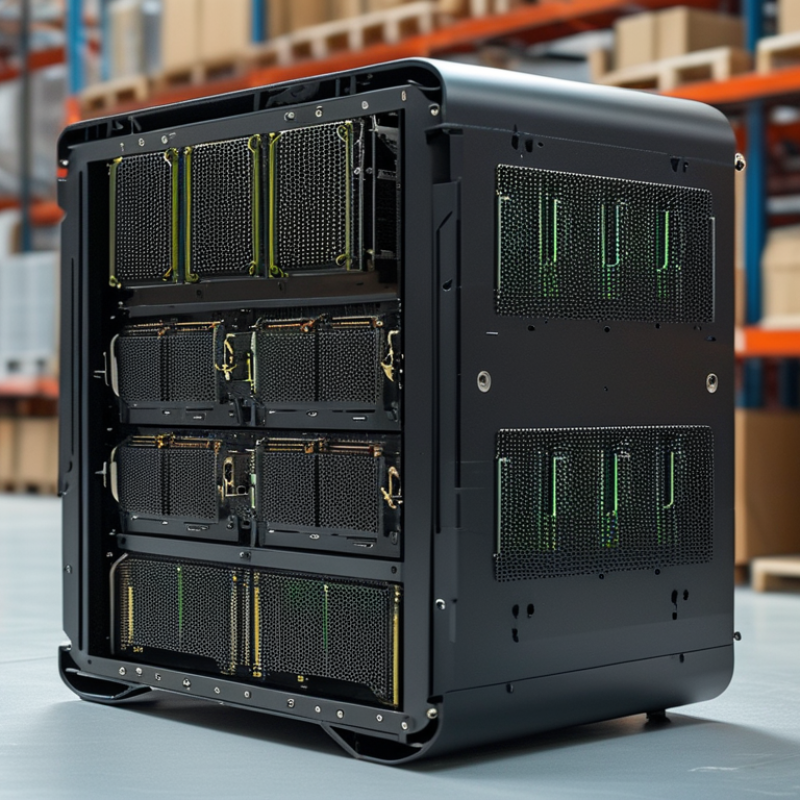
Edge AI servers are computing systems designed to process artificial intelligence tasks near the data source. Instead of sending every video frame, sensor reading, or voice command to a distant cloud, they analyze information locally. This reduces response time and can lower network traffic. In a warehouse, for example, a nearby server can identify a damaged package within seconds. It can also continue working when internet access becomes unstable.
The role of an edge AI server extends beyond speed. It supports real-time decisions, controlled data handling, and more predictable operating costs. Practical systems often combine high-performance processors, accelerators, fast storage, and efficient cooling. However, the label is not magic. A powerful server may still perform poorly with weak data, unsuitable models, or inadequate thermal planning. Engineers should test workloads in realistic conditions, including dust, heat, vibration, and peak demand. Model drift is another concern. A system trained on clear daytime images may struggle at night. That limitation deserves attention.
Tips: Match hardware to the actual model and workload. Measure latency, power use, and maintenance needs before deployment. Keep backup procedures available. Small pilot tests can reveal hidden problems, although they may not represent every operating condition. Review results honestly, then adjust the design.
China’s edge AI server manufacturers are shifting from centralized computing toward compact, site-ready systems. IDC’s Worldwide AI and Generative AI Spending Guide projects global AI infrastructure spending to reach about $227 billion by 2028. This demand rewards manufacturers that combine computing density with manageable power consumption.
Heterogeneous computing is central. CPUs handle orchestration, while GPUs, NPUs, or custom accelerators process vision and language workloads. Local inference reduces response time and limits unnecessary data transfers. It also exposes a practical weakness: edge devices often operate in dusty factories, roadside cabinets, or unmanned rooms. Rugged enclosures, vibration control, and remote diagnostics therefore matter as much as benchmark scores.
Thermal design is becoming decisive. The IEA reports that data centers used roughly 460 TWh of electricity globally in 2022, with consumption potentially exceeding 1,000 TWh by 2026. China-based manufacturers increasingly use high-efficiency fans, heat pipes, liquid cooling, and dynamic power management. High-speed networking, secure boot, encrypted storage, and model quantization support dependable deployment. Yet cooling claims can look better in laboratories than in summer field conditions. Buyers should request workload-based tests, service records, and failure-rate data, not only peak performance figures.
China Top Edge AI Server Manufacturer for Global Buyers
Evaluating a Chinese edge AI server supplier requires more than comparing prices. Check its engineering history, production capacity, and export experience. Ask for test reports covering thermal performance, vibration, power stability, and network latency. A reliable supplier should explain its CPU, GPU, NPU, memory, and storage choices clearly. Request a working sample, not only product photographs.
Run the server in realistic conditions. Place it near cameras, robots, or industrial sensors. Measure inference speed, fan noise, temperatures, and recovery after power interruption. Review firmware update procedures and data protection controls. Confirm component traceability, quality inspections, and applicable safety certifications. Speak with recent international customers when possible. A polished factory tour proves little. I have seen attractive specifications hide weak cooling design. That mistake can become expensive after deployment.
Tips: Create a written scoring sheet. Include hardware, software, delivery, warranty, and support. Test identical workloads on every shortlisted sample. Ask how replacement parts are stocked locally. Clarify response times for remote diagnosis and on-site service. Do not accept vague promises. Require dated documents and measurable commitments. Supplier evaluation is never perfect, and my own checklists have missed details. Leave room for independent testing and a second technical review.
This practical procurement framework prioritizes measurable factors that global buyers commonly review when assessing edge AI server suppliers. Technical performance, energy efficiency, thermal reliability, and connectivity receive the highest weighting because they directly affect deployment cost, uptime, and AI workload performance. Supply continuity, compliance, warranty coverage, and technical support should also be verified through documented tests, certifications, service-level agreements, and reference projects.
Manufacturing edge AI servers requires more than assembling high-performance parts. The International Data Corporation projects global AI infrastructure spending to reach 632 billion dollars by 2028. This growth increases pressure on thermal design, delivery consistency, and factory-level traceability. Our process begins with validated component lists, controlled assembly areas, and serial-number tracking for every system. Technicians inspect cable routing, airflow paths, firmware versions, and power connections before testing.
Customization is practical, not decorative. Global buyers may request compact chassis, extended-temperature operation, specific network interfaces, or localized power configurations. Engineers review these requirements against thermal limits and service conditions. A prototype is tested with sustained inference workloads, not only short benchmark runs. The International Energy Agency reported that data center electricity consumption could exceed 1,000 terawatt-hours by 2026. Efficient fans, optimized accelerators, and measured power profiles therefore influence real operating costs.
Quality control continues after assembly. Each server can undergo burn-in testing, memory diagnostics, storage verification, network checks, and repeated restart cycles. Test records should remain available for shipment approval and later service analysis. Small failures still happen. A connector may pass inspection but loosen during vibration testing. That is why corrective-action reviews matter. We also examine rejected units instead of hiding them. The process is not perfect, and some customization requests need redesign. Reliable manufacturing comes from finding those limits early.
China Top Edge AI Server Manufacturer for Global Buyers
Edge AI servers are moving inference closer to real-world data. In factories, cameras can inspect product surfaces beside production lines. At retail sites, local processing can track inventory without sending every image to the cloud. Remote clinics may use compact systems for image analysis when connectivity is unstable. This reduces latency. However, heat, dust, vibration, and limited network access can change performance quickly.
Global buyers should evaluate more than processor specifications. Ask for tested thermal data, sustained inference results, and power consumption under full workload. A server operating inside a 35°C equipment room needs dependable cooling. Power input, rack depth, noise, and accelerator compatibility also affect deployment costs. Support matters too. Clarify firmware updates, spare-part access, repair procedures, and communication channels before signing a purchase agreement. Export documentation and regional compliance records should be checked early.
A practical pilot should use real cameras, actual workloads, and local network conditions. Measure accuracy under poor lighting and irregular data. Record response time, energy use, and recovery after a restart. Do not trust peak benchmark numbers alone. I have seen impressive laboratory results weaken when storage became saturated. The overlooked issue is usually maintenance access. A remotely managed system may still need a technician on site. Buyers should leave room for uncertainty, because field conditions rarely match the specification sheet.
| Application Area | Typical AI Workload | Recommended Edge Server Configuration | Key Performance Target | Environmental Requirement | Procurement Considerations |
|---|---|---|---|---|---|
| Smart Manufacturing | Visual defect detection, predictive maintenance, anomaly detection and production-line monitoring. | 1–2 CPU sockets, 32–128 CPU cores, 128–512 GB ECC memory, one or more inference accelerators, NVMe storage and 10/25 GbE networking. | Low and consistent inference latency; support for multiple camera streams and continuous operation. | Industrial dust protection, vibration tolerance, reliable cooling and optional extended-temperature operation. | Confirm camera protocol compatibility, accelerator SDK support, remote management and long-term spare-part availability. |
| Retail and Smart Stores | People counting, queue analysis, shelf monitoring, loss prevention and customer-flow analytics. | 8–32 CPU cores, 64–256 GB ECC memory, compact GPU or AI accelerator, 2–8 TB local storage and 1/10 GbE ports. | Real-time video inference with efficient power consumption and local data filtering. | Quiet operation, compact rack or wall-mount design and stable performance in commercial indoor environments. | Evaluate privacy controls, camera density, storage retention period, fan noise and physical security features. |
| Transportation and Logistics | Traffic-flow analysis, vehicle classification, license-plate processing, fleet monitoring and warehouse automation. | 16–64 CPU cores, 128–512 GB ECC memory, video-oriented accelerator, high-endurance NVMe storage and multiple network interfaces. | High stream throughput, predictable response time and uninterrupted operation at distributed sites. | Wide operating-temperature options, surge protection, redundant power and optional cellular or industrial networking. | Check regional data-protection rules, GPS or sensor integration, redundant storage and remote fleet management. |
| Energy and Utilities | Substation inspection, thermal-image analysis, equipment anomaly detection and distributed asset monitoring. | 16–64 CPU cores, 128–512 GB ECC memory, industrial-grade storage, optional accelerator and redundant networking. | High availability, accurate model execution and reliable local processing when backhaul connectivity is limited. | Extended-temperature support, dust and moisture protection, surge tolerance and remote health monitoring. | Request MTBF data, power-budget details, industrial compliance documentation and a defined maintenance procedure. |
| Healthcare and Medical Imaging | Image pre-processing, clinical decision support, medical workflow automation and secure local inference. | 16–64 CPU cores, 128–512 GB ECC memory, fast encrypted storage and accelerator support validated for the target software. | Reliable results, low processing delay and strict protection of locally stored patient data. | Controlled indoor environment, redundant components and secure boot or hardware-based security options. | Verify applicable medical-device, cybersecurity, privacy and interoperability requirements before deployment. |
| Telecommunications and 5G Edge | Network analytics, video optimization, virtual network functions, traffic classification and edge-cloud services. | 32–128 CPU cores, 256 GB–1 TB ECC memory, high-speed NICs, optional accelerator and redundant boot or data storage. | High packet-processing capacity, low network latency and support for virtualization or containerized workloads. | NEBS-oriented mechanical and thermal design where required, redundant power and efficient airflow management. | Check SR-IOV, DPDK, Kubernetes, virtualization, time synchronization and network-interface compatibility. |
| Security and Public Infrastructure | Video surveillance analytics, intrusion detection, crowd analysis and access-control automation. | 16–64 CPU cores, 128–512 GB ECC memory, video inference accelerator, RAID-capable storage and multiple display or network outputs. | Continuous multi-stream processing, high availability and secure event retention. | Tamper-resistant chassis, redundant cooling or power options and operation in indoor or semi-outdoor enclosures. | Assess encryption, audit logging, retention policy, access control, export restrictions and local privacy legislation. |
| Edge Generative AI | Local assistants, retrieval-augmented generation, document processing, speech recognition and model fine-tuning. | 32–128 CPU cores, 256 GB–1 TB ECC memory, high-memory AI accelerator, 4–16 TB NVMe storage and 25/100 GbE for clustered systems. | Sufficient accelerator memory, token-generation speed, concurrent-user capacity and secure model storage. | High-power cooling, adequate rack capacity, redundant power and acoustic requirements appropriate to the site. | Validate framework versions, quantization support, model-license terms, accelerator memory and total power consumption. |
| Global Deployment and Logistics | Multi-country rollouts requiring standardized hardware, remote monitoring and consistent software images. | Modular rack or edge chassis, ECC memory, hot-swappable storage or power options, remote management controller and standardized firmware. | Repeatable performance, predictable lead time and simplified deployment at multiple locations. | Regional power compatibility, suitable shipping protection and documented operating-temperature limits. | Confirm Incoterms, customs documentation, product classification, warranty coverage, regional service capability and spare-unit policy. |
I servers checked during manufacturing?
Buyers may request compact chassis, extended-temperature operation, special network interfaces, or regional power configurations. Engineers compare every request with thermal and service limits. Some requests need redesign.
Prototypes run sustained inference workloads, not only short benchmark tests. Testing examines airflow, fan efficiency, accelerator temperature, and power behavior. A 35°C equipment room can expose weak cooling quickly.
Testing may include burn-in, memory diagnostics, storage verification, network checks, and repeated restarts. Vibration testing can reveal loose connectors. Failures still happen.
Rejected units are examined instead of hidden. Teams review the cause and define corrective actions. The process is not perfect, but early findings reduce later problems.
They can process factory camera data near production lines. Retail sites may track inventory locally. Remote clinics may analyze images during unstable connectivity. Heat, dust, and vibration still matter.
Review sustained inference results, thermal data, power use, rack depth, noise, and accelerator compatibility. Also confirm firmware support, spare parts, repairs, and communication channels. Specification sheets are not enough.
Use real cameras, local networks, and representative workloads. Measure accuracy in poor lighting, response time, energy use, and restart recovery. Peak numbers mislead. Leave room for uncertainty.
Edge AI servers bring data processing, inference, and decision-making closer to where information is created, reducing latency, bandwidth use, and dependence on centralized cloud systems. China’s edge ai server manufacturer sector combines high-performance processors, AI accelerators, advanced cooling, compact designs, secure networking, and flexible operating platforms to support demanding workloads in industrial automation, transportation, retail, healthcare, energy, and smart infrastructure.
For global buyers, evaluating Chinese suppliers requires careful review of engineering capabilities, product scalability, certifications, cybersecurity practices, delivery reliability, and after-sales support. A dependable manufacturer should provide transparent customization options, consistent component sourcing, strict assembly procedures, thermal testing, performance validation, and quality control throughout production. Buyers should also assess deployment conditions, power requirements, connectivity standards, maintenance needs, import documentation, and compliance with applicable local regulations. With thorough technical and commercial due diligence, organizations can select edge AI server solutions that balance performance, durability, efficiency, and long-term operational value.
