NexCore NexCore

2026 Top AI Inference Server Manufacturers to Buy?

Time:2026-10-14 Author:Sophia
0%

Choosing the right AI inference server manufacturer in 2026 will require more than comparing accelerator names. Buyers must examine real deployment conditions, including model size, token latency, rack density, memory bandwidth, cooling capacity, and software support. A server that performs well in a laboratory may struggle inside a crowded data center. That difference matters.

NVIDIA founder and CEO Jensen Huang has repeatedly emphasized, “The future of computing is accelerated computing.” His statement reflects the direction of modern inference infrastructure, where GPUs, networking, optimized runtimes, and efficient memory systems work together. However, acceleration alone does not guarantee business value. Dell Technologies, HPE, Lenovo, Supermicro, NVIDIA, and other established suppliers offer different approaches to configuration, service, and long-term expansion. Their strengths should be judged against actual workloads, not marketing claims.

This guide examines the leading AI inference server manufacturers to buy in 2026. It considers performance per watt, deployment flexibility, technical support, security practices, warranty coverage, and total ownership costs. It also looks at practical details, such as whether a server can sustain low-latency responses during peak traffic or whether its cooling design creates unexpected limits. No universal winner exists. Some comparisons remain imperfect because published benchmarks rarely mirror every customer environment. That uncertainty deserves attention. Careful buyers should test representative models, measure production-like latency, and confirm upgrade paths before signing a purchase agreement.
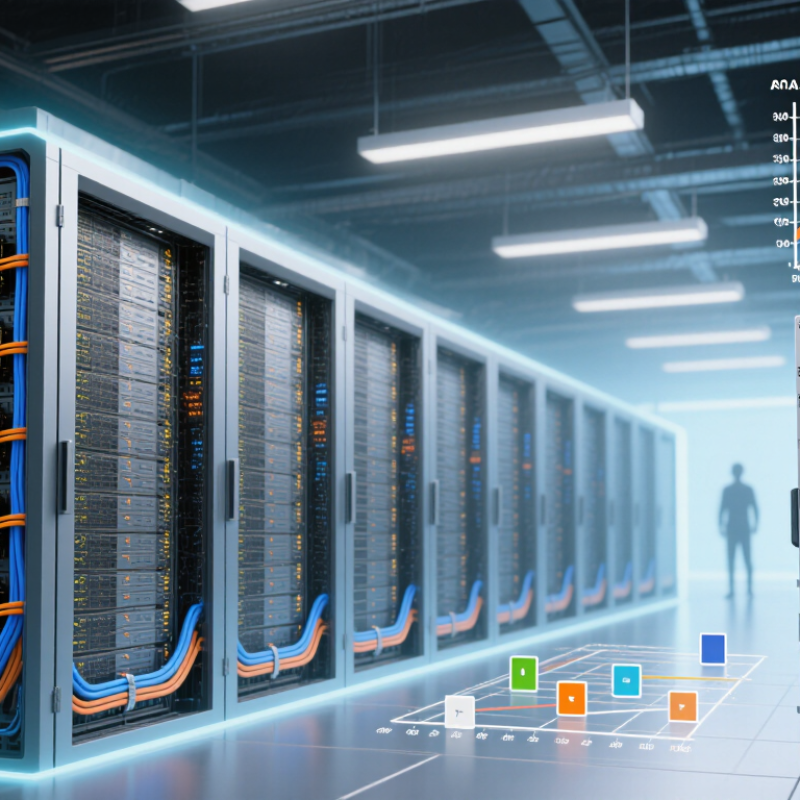
2026 Top AI Inference Server Manufacturers to Buy?

What Is an AI Inference Server and Why Does It Matter in 2026?

An AI inference server runs trained models and returns predictions when users send prompts, images, or sensor data. Training builds the model; inference delivers its daily value. In 2026, that difference matters because response speed, operating cost, and data control directly affect service quality.

Stanford’s AI Index 2025 reports that GPT-3.5-level inference costs fell more than 280-fold between November 2022 and October 2024. Cheaper inference will increase demand, not reduce infrastructure pressure.

The International Energy Agency estimated that data centers consumed about 415 TWh of electricity in 2024, with demand potentially reaching 945 TWh by 2030. Latency becomes visible.

A practical buying review should measure tokens per second, memory bandwidth, power use, cooling needs, and performance at realistic batch sizes.

Published benchmarks can mislead. Workloads differ sharply between chat, video analysis, and industrial detection.

I would also test failure recovery, software compatibility, and sustained performance over several hours. Peak speed alone is an incomplete answer.

A reliable inference server should support secure local processing, predictable maintenance, and flexible model deployment without creating unnecessary energy waste.

Key Hardware and Software Features of Modern Inference Servers

When evaluating 2026 inference server manufacturers, examine the complete platform, not just accelerator speed. Modern servers need high-bandwidth memory, fast interconnects, and balanced CPU resources. A powerful processor can still waste time when data arrives too slowly. In production testing, token latency often changes under mixed workloads. Measure both first-token delay and sustained throughput.

Thermal design deserves equal attention. Dense systems may require liquid cooling, redundant fans, and careful rack planning. Reliable power supplies reduce interruptions during continuous model serving. Hardware telemetry should expose temperature, memory errors, power use, and accelerator health. These details support faster diagnosis. They also reveal weaknesses before users notice them.

Software features determine daily efficiency. Look for optimized runtimes, dynamic batching, quantization support, container compatibility, and automated model rollout tools. Strong monitoring should track request queues, failed calls, latency percentiles, and cost per response. Open interfaces can simplify integration with existing orchestration systems. Independent benchmarks matter more than attractive specification sheets. Test realistic prompts, changing sequence lengths, and simultaneous users. Vendor support, security updates, spare-part access, and clear service agreements also influence long-term reliability. I have seen excellent hardware underperform because its software stack lacked practical tuning guides. No specification is perfect. Leave room for operational learning.

2026 Top AI Inference Server Manufacturers to Buy?

Key Hardware and Software Features of Modern Inference Servers

The chart presents generalized real-world throughput ranges for INT8 inference deployments. Actual performance depends on model architecture, batch size, sequence length, memory bandwidth, power limits, and software optimization.

When evaluating an inference server, prioritize accelerator support, high-bandwidth memory, PCIe or CXL expansion, quantization, dynamic batching, model compilation, runtime kernel optimization, KV-cache management, observability, and efficient power utilization.

Leading AI Inference Server Manufacturers to Consider in 2026

Leading AI Inference Server Manufacturers to Consider in 2026

The strongest manufacturers will not be judged by accelerator speed alone. Buyers should examine rack density, memory bandwidth, cooling design, firmware quality, and long-term support. IDC’s Worldwide AI and Generative AI Spending Guide projects global AI spending to reach more than 630 billion dollars by 2028. That growth will increase demand for reliable inference infrastructure.

Inference workloads are changing quickly. Large language models need fast memory access, while vision systems often require low-latency processing near cameras or machines. Manufacturers offering flexible configurations deserve closer attention. Look for modular servers, multiple accelerator options, and tested support for container platforms.

MLPerf Inference results can help compare latency and throughput. Still, benchmark conditions may not match your production traffic.

Real deployment details matter.

The International Energy Agency estimates data-center electricity use could approach 945 terawatt-hours annually by 2030. Efficient power supplies, liquid cooling, and workload-aware scheduling are becoming purchasing factors, not optional extras. Uptime Institute’s industry research also highlights rising concerns about power availability and operational resilience. Ask manufacturers for measured performance at your target batch size, not only peak figures. Request service response times, spare-parts policies, and firmware update procedures. I would also question optimistic total-cost estimates. They often exclude cooling, software licenses, and technician hours. That omission can change the decision.

How to Compare AI Inference Servers for Different Workloads

2026 Top AI Inference Server Manufacturers to Buy?

Comparing AI inference servers starts with the workload, not the product label. In production testing, I measure response time, throughput, power use, and uptime together. A conversational system needs low latency for every user request. A batch vision pipeline usually values throughput and storage capacity more. Real-time analytics may require predictable performance under changing traffic. Memory size also matters when models, caches, and preprocessing share one system. A server with excellent peak speed can still disappoint during sustained operation. I learned this after focusing too heavily on benchmark results.

Tips: Define your workload with real request data. Test short bursts and six-hour runs. Check power consumption at idle and full load. Review cooling requirements, rack depth, service access, and upgrade options. Ask for independent test conditions, not only vendor-selected figures. Keep a small performance margin for model growth. It is easy to underestimate preprocessing overhead.

For language models, compare accelerator memory, interconnect speed, and token latency. For image workloads, examine parallel processing, input pipelines, and local storage speed. For recommendation systems, prioritize memory bandwidth and fast database access. Security controls, monitoring tools, and recovery procedures deserve equal attention. I also inspect warranty terms and technician response times. Hardware failure is inconvenient, but unclear support can extend downtime. Some comparisons remain uncertain because workload behavior changes after deployment. That uncertainty should appear in the purchasing decision.

Buying Criteria: Performance, Cost, Scalability, and Support

2026 Top AI Inference Server Manufacturers to Buy?

Buying Criteria: Performance, Cost, Scalability, and Support

Choosing an AI inference server manufacturer requires more than reading peak benchmark scores. Test performance with your actual models, batch sizes, and response-time targets. A server may process thousands of requests per second, yet struggle with small, urgent requests. Measure twice. Check memory capacity, accelerator compatibility, network speed, and cooling design. These details affect daily reliability more than attractive laboratory results.

Cost should include power, software, maintenance, and replacement parts. A cheaper server can become expensive when electricity runs continuously. Request three-year operating estimates, not only purchase prices. Review warranty coverage and repair timelines carefully. Support matters. Ask whether engineers provide deployment guidance, firmware updates, and clear escalation procedures. Speak with existing customers when possible, but treat every reference as incomplete evidence.

Scalability also needs practical testing. Confirm whether additional servers can join the cluster without major redesign. Examine rack space, power limits, orchestration tools, and data-transfer capacity. Manufacturers should explain upgrade paths in writing. Avoid promises based only on future hardware. Your workload may change faster than expected. I would reserve part of the budget for unexpected integration work, because even well-planned deployments often reveal driver conflicts or uneven model performance. A short pilot using production-like traffic can expose these weaknesses before a large purchase.

FAQS

What should buyers evaluate beyond accelerator speed?

Examine memory bandwidth, rack density, cooling, firmware, and long-term technical support. Peak speed alone can mislead.

How should an AI inference server be tested?

Use your actual models, batch sizes, and request patterns. Test short bursts and six-hour runs. Measure twice.

Which metrics matter for production inference?

Track latency, throughput, power use, uptime, and sustained performance together. Record results at your target batch size.

What matters most for language-model workloads?

Compare accelerator memory, interconnect speed, and token latency. Fast memory access can improve response consistency.

What server features suit image-processing workloads?

Check parallel processing, input pipelines, local storage speed, and low-latency connections. Camera-based systems may need nearby processing.

How should total cost be calculated?

Include hardware, electricity, cooling, software licenses, maintenance, spare parts, and technician hours. Cheap equipment may cost more later.

Why are cooling and power important purchasing factors?

Continuous inference can create heavy heat and electricity demand. Efficient power supplies, liquid cooling, and scheduling reduce operating pressure.

What support questions should buyers ask manufacturers?

Request service response times, warranty details, spare-parts policies, firmware procedures, and escalation contacts. Support matters.

How can buyers prepare for future growth?

Confirm cluster expansion, rack space, power limits, orchestration tools, and data-transfer capacity. Keep budget for integration surprises.

Are benchmark results enough for a purchase decision?

No. Benchmark conditions may differ from production traffic, preprocessing, or sustained workloads. Test it yourself.

Conclusion

In 2026, an AI inference server is a specialized system designed to run trained artificial intelligence models and deliver fast, reliable predictions in real time. Its importance continues to grow as businesses adopt AI for automation, customer service, analytics, robotics, and edge applications. Modern systems combine powerful processors, accelerators, high-speed memory, efficient storage, optimized networking, and software frameworks that support model deployment, monitoring, security, and energy management.

This guide explains how to evaluate a suitable ai inference server manufacturer and compare solutions for different workloads, including language processing, computer vision, recommendation systems, and real-time analytics. Key buying factors include inference speed, latency, accuracy, total cost of ownership, scalability, power efficiency, compatibility with existing platforms, maintenance, and technical support. By balancing present performance needs with future expansion plans, organizations can select an inference server that delivers dependable results, flexible deployment, and long-term operational value.

Sophia

Sophia

Sophia is a dedicated marketing professional with an exceptional depth of knowledge about her company's products and services. With a keen understanding of market trends and customer needs, she crafts insightful blog posts that not only inform but also engage readers, enriching the company’s online......